
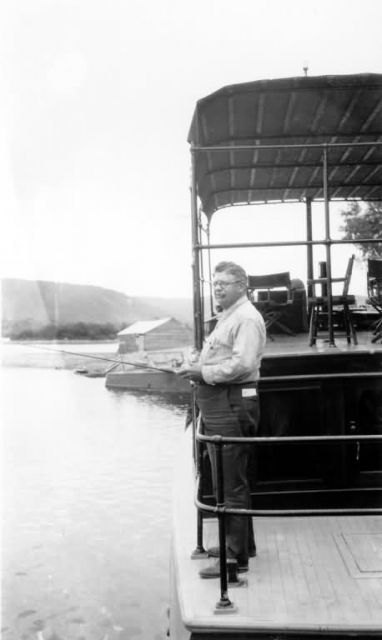
A moment of quiet reflection on the northern reaches of the Mississippi River, as Bureau of Biological Survey chief Ira Gabrielson (1889-1977) casts a line off a vessel of the Upper Mississippi River National Wildlife and Fish Refuge during a 1937 Congressional visit to the young facility, established in 1924 to protect some 270 bird species and 133 kinds of fish in Minnesota, Iowa, Wisconsin, and Illinois. Remembered lovingly as ââ¬ÅMr. Conservationââ¬Â and, simply, ââ¬ÅGabe,ââ¬Â Gabrielson once complained that every day spent cooped up in a stuffy agency office in Washington is ââ¬Ålike serving a prison sentence.ââ¬Â The former high school biology teacherââ¬â¢s later career cut a wide swath across natural resource conservation in the mid-20th Century, encompassing game management, rodent control, economic ornithology, and wildlife food habits research. Gabrielson became an authority on the plants and animals of the intermountain West, wrote books on Oregon and Alaska bird life, managed Americaââ¬â¢s seafood production during the Second World War, negotiated at international whaling conferences, and authored monumental works on sporting fishing. Some place him on par with his contemporary, Aldo Leopold, for his contributions to American conservation; at heart, the jovial Gabrielson liked nothing more than being a boy with a fishing pole on the banks of the Mississippi.
Hide.


