
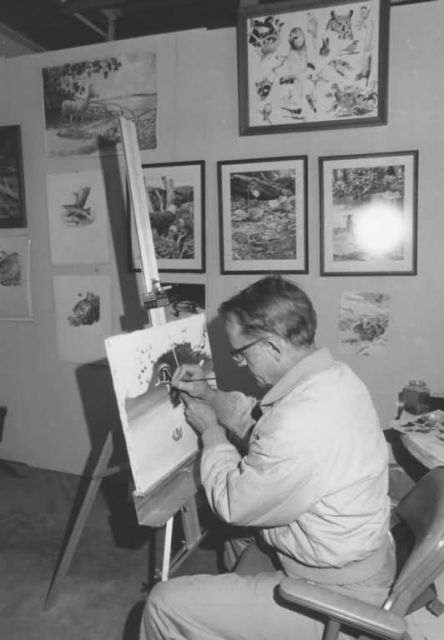
Robert ââ¬ÅBobââ¬Â Hines (1912 - 1994), as the U.S. Fish and Wildlife Serviceââ¬â¢s only national wildlife artist, brought the practiced eye of an avid outdoorsman to his vocation, discerning the intricate details of a wild turkeyââ¬â¢s breast feathers or the shades of light in an Okefenokee sunset. Yet the Columbus, Ohio, native had almost no formal training in art or biology. At age 27, Hines was staff artist for the Ohio Division of Wildlife; he was invited in 1946 to design the 1946-47 Migratory Bird Hunting and Conservation Stamp, a pen-and-ink wash drawing of redhead ducks that became the 13th Federal ââ¬ÅDuck Stamp.ââ¬Â His work brought him to the attention of Fish and Wildlife Service editor Rachel Carson, who supervised Hines when he accepted the position of staff artist for the Federal agency in 1947. ââ¬ÅI was asked if I had any objection to working for a woman,ââ¬Â Hines said of that ââ¬Åpre-enlightenmentââ¬Â age in the American workplace. ââ¬ÅI told them absolutely not,ââ¬Â replied Hines, who went on to forge a productive partnership with the well-known Carson, illustrating her 1955 book, ââ¬ÅThe Edge of the Seaââ¬Â and accompanying her on numerous specimen collection trips at national wildlife refuge tide pools from Maine to Florida. Hines was a hunter and angler; he stressed the artistic importance of the ââ¬Ålookââ¬Â of a bald eagle or a gray fox in its habitat over more composed, studio-like depictions. ââ¬ÅHe was truly a national treasure,ââ¬Â remembers Fish and Wildlife Service colleague Dan Stiles. ââ¬ÅHis personal friends included several Secretaries of the Interior, who would occasionally slip into his office to enjoy Bobââ¬â¢s company and listen to his tales of his outdoor adventures. His sense of humor and relaxed, modest air belied his tremendous talent.ââ¬Â Here, Hines works on a wood duck painting at Virginiaââ¬â¢s Chincoteague National Wildlife Refuge, date unknown.
Hide.


