
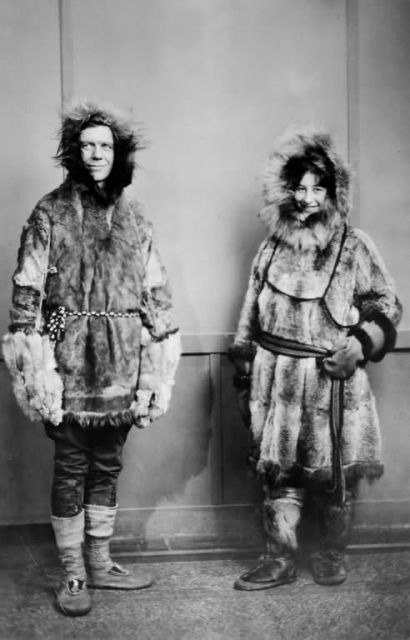
Olaus (1889 - 1963) and Margaret ââ¬ÅMardyââ¬Â (1902 - present) Murie led a life of adventure worthy of a Hollywood movie or a romance novel, and their contributions to American conservation continue to cast long shadows. Minnesota native Olaus Murie joined the Bureau of Biological Survey, predecessor to the U.S. Fish and Wildlife Service, in 1920, beginning a 25-year career with the agency that included renowned studies of Alaska caribou and Wyoming elk and helped earn Murie a reputation as one of Americaââ¬â¢s leading exponents of conservation in the Arctic. Mardy Murie, a Seattle native, moved to Fairbanks while a young girl and was the first woman to graduate from the University of Alaska at Fairbanks in 1924. The two married that same year; their honeymoon ââ¬â a 500-mile caribou research expedition through the Brooks Range by dogsled ââ¬â is legendary, and their Alaska adventures were chronicled in their book, ââ¬ÅTwo in the Far North.ââ¬Â The pair moved to Wyoming to study elk in 1926; as Olaus Murieââ¬â¢s tenure with the Service ended in 1945 and he became director of The Wilderness Society, they emerged as forceful advocates for conservation and wilderness protection in the far north. In their 39 years as a married couple, Mardy Murie relates, she only saw her husband cry twice ââ¬â one of those times being in 1960 when he got word that the Arctic Wildlife Range would become Arctic National Wildlife Refuge. The Muries are credited with being major forces behind the passage of the 1964 Wilderness Act, signed by President Lyndon Johnson just months after Olaus Murieââ¬â¢s death.
Hide.


