
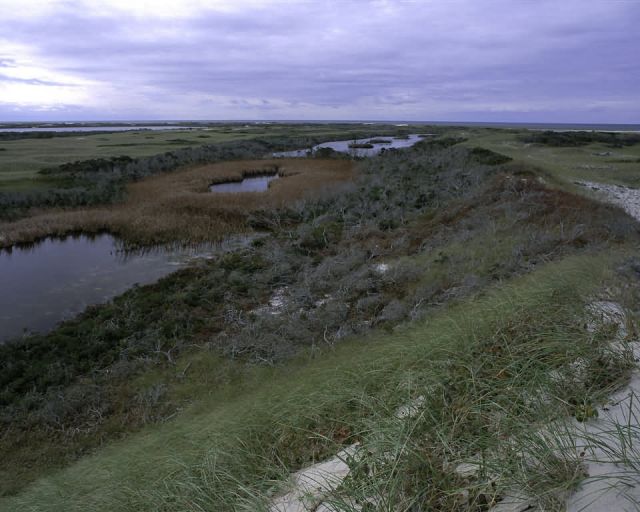
Monomoy NWR, Chatham, Massachusetts: In the 11th and 12th centuries, Monomoy Peninsula was a Viking haven. Then in the late 16th or early 17th Century, French explorer Samuel de Champlain took refuge here when his ship’s rudder broke. In 1711, a tavern for sailors operated near the middle of the peninsula and in the mid-1800s, a fishing community thrived at the southern end of the peninsula and then slowly died out. A lighthouse guided sailors in the treacherous waters of the southern end of the peninsula from 1828 through 1923 and the Coast Guard had a staffed installation in the same area as the fishing village from 1905-1945. In 1958, a hurricane separated the peninsula from the mainland and in 1978, another winter storm divided the relatively new island into two islands: North Monomoy Island and South Monomoy Island, collectively known now as Monomoy National Wildlife Refuge. Where once Vikings and explorers and sailors took refuge, now endangered species such as roseate terns and piping plovers find protection. Gray and harbor seals are found here, along with gannets, cormorants, loons, and various species of ducks. Wild roses, heaths, and orchids lend seasonal color to these barrier islands. The only access is by boat. Trips are best guided by local boatmen familiar with the waters. But once there, the visitor will find excellent opportunities for beach combing, wildlife photography and study, and surf fishing.
Hide.


